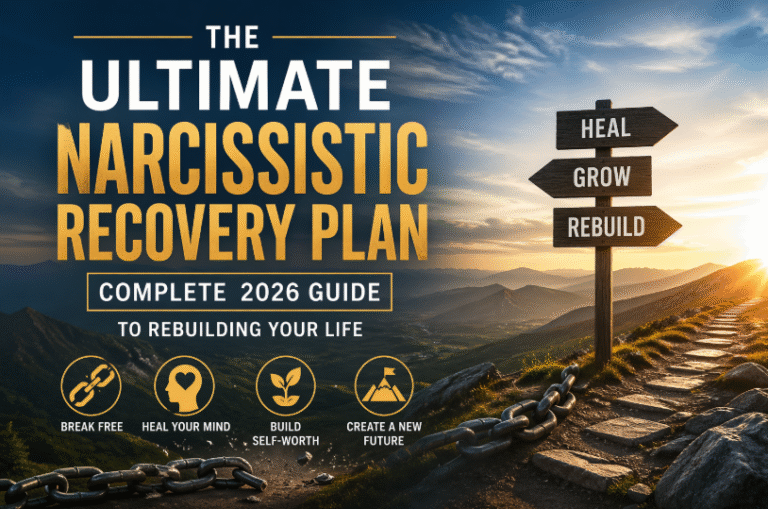






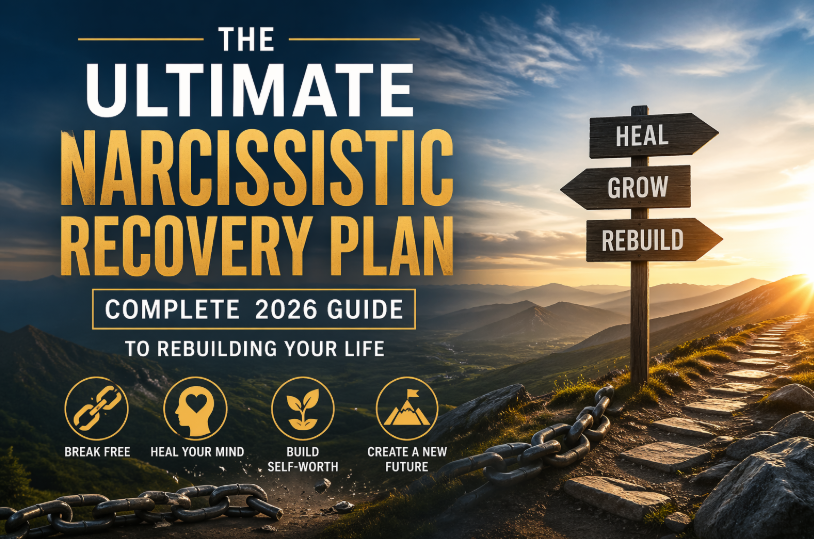
The Ultimate Narcissistic Recovery Plan: Complete 2026 Guide to Rebuilding Your Life
Healing after a narcissistic relationship is not something that happens overnight. It is not just about walking away or cutting contact; it is about rebuilding your sense of self, your emotional safety, and your ability to trust again. Many people who go through narcissistic abuse feel like they have lost a part of themselves. They feel confused, emotionally drained, and unsure of who they are without that relationship.
This is why having a structured narcissistic recovery plan is so important. Without direction, healing can feel overwhelming. You may go back and forth between missing the person and remembering the pain. You may question your decisions or even blame yourself. But with the right guidance and understanding, recovery becomes clearer, more stable, and more empowering.
Understanding What Narcissistic Abuse Does to You
Before you can fully heal, it is important to understand the depth of your experience. Narcissistic abuse is not always obvious in the beginning. It often starts with charm, attention, and emotional connection. But over time, it shifts into control, manipulation, and emotional instability.
You may have experienced patterns like constant criticism, being blamed for everything, feeling like you had to “earn” love, or being made to doubt your own thoughts and feelings. This kind of environment slowly affects your mental and emotional state. It can make you feel small, unsure, and dependent.
Over time, you may stop trusting your own judgment. You may start prioritizing the other person’s needs over your own just to avoid conflict. This is not a reflection of weakness; it is a natural response to a difficult situation.
A strong narcissistic recovery plan begins by recognizing that what you went through had a real impact on you. Healing starts when you stop minimizing your experience and start taking it seriously.
Accepting the Truth Without Excuses
One of the hardest steps in recovery is accepting the truth about the relationship. Many people hold on to the good moments and hope that things could have been different. You may find yourself thinking about the early stages when everything felt perfect or the rare times when the person showed kindness.
But true healing begins when you look at the full picture, not just the highlights. A narcissistic relationship is often built on cycles, moments of affection followed by periods of emotional pain. These cycles create confusion and attachment.
Accepting the truth does not mean you hate the person. It means you are choosing to see reality clearly. It means you are no longer making excuses for behavior that hurts you.
This step can feel painful, but it is also incredibly freeing. It allows you to stop chasing something that was never stable to begin with.
Breaking the Emotional Attachment
Even after leaving, many people feel emotionally tied to the narcissist. This is often because of what is known as a trauma bond. The emotional ups and downs in the relationship create a strong psychological attachment.
You may miss them, even though you know they hurt you. You may feel tempted to check their social media or reach out just to feel connected again. This is a normal part of the healing process, but it is something you need to work through consciously.
Breaking this attachment requires effort. It means reminding yourself of the reality of the relationship, not just the parts you miss. It means choosing long-term peace over short-term comfort.
Over time, as you create distance and focus on yourself, this attachment will weaken. It will not happen instantly, but it will happen.
Creating Distance to Protect Your Healing
Distance is one of the most powerful tools in any narcissistic recovery plan. When you continue to stay in contact, even in small ways, it becomes harder to heal. Old emotions can come back quickly, and you may find yourself pulled into the same patterns again.
If possible, going completely no contact is the most effective option. This means removing them from your daily life, no messages, no checking updates, no indirect communication.
If a complete distance is not possible, then the goal is to limit contact as much as you can. Keep interactions short, neutral, and focused only on what is necessary.
This is not about punishment. It is about giving yourself the space you need to recover.
Rebuilding Your Identity Step by Step
One of the biggest challenges after narcissistic abuse is figuring out who you are again. During the relationship, you may have adjusted your personality, your preferences, and even your values to keep things stable.
Now, you have the opportunity to rediscover yourself.
Start by paying attention to what feels right to you. What do you enjoy? What makes you feel calm or excited? What kind of environment do you want to be in?
You do not need to have all the answers immediately. This is a gradual process. Every small choice you make for yourself helps rebuild your identity.
Over time, you will start to feel more connected to yourself again. You will begin to trust your own thoughts and feelings.
Rebuilding Self-Worth from Within
Narcissistic abuse often leaves deep marks on your self-esteem. You may have been made to feel like you were not enough, no matter how much effort you put in.
Rebuilding self-worth is not about becoming perfect; it is about recognizing your value as you are.
This takes consistent effort. It means changing the way you talk to yourself. It means noticing when you are being overly critical and choosing a more balanced perspective.
It also means celebrating progress, even if it feels small. Healing is not about big, dramatic change; it is about steady growth.
A strong narcissistic recovery plan always includes rebuilding self-worth because it affects every part of your life.
Learning to Set Boundaries Without Fear
Boundaries are essential for protecting your emotional well-being. If you were in a narcissistic relationship, you may not be used to setting boundaries. You may feel guilty or uncomfortable when you try.
But boundaries are not about pushing people away; they are about creating healthy limits.
This might look like saying no when something does not feel right, not over-explaining your decisions, or walking away from conversations that become disrespectful.
At first, this may feel unnatural. But with practice, it becomes easier. And the more you respect your own boundaries, the more others will learn to respect them too.
Healing Emotionally Instead of Avoiding Pain
But avoiding them does not make them disappear; it only delays healing.
Instead, allow yourself to feel what comes up. This might include sadness, anger, frustration, or even relief. Find healthy ways to express them. Writing, talking, or even sitting quietly with your thoughts can help you process what you have been through.
Healing is not about forcing yourself to feel better quickly. It is about giving yourself the space to feel and understand your emotions.
Building a Life That Feels Safe and Stable
As you move forward, your focus should shift from just healing to creating a life that feels safe and stable. This means surrounding yourself with people who respect you, creating routines that support your well-being, and making choices that align with your values.
You deserve a life that feels calm, not chaotic. You deserve relationships that feel supportive, not draining.
This part of the narcissistic recovery plan is about long-term change. It is about building a foundation that supports your growth.
Moving Forward Without Losing Yourself Again
One of the biggest fears after recovery is repeating the same patterns. The key to avoiding this is awareness.
Pay attention to red flags. Trust your instincts. Take your time getting to know people. Do not ignore behaviours that make you uncomfortable.
Most importantly, stay connected to yourself. When you know who you are and what you need, it becomes much harder for someone else to take that away.
Final Thoughts
A narcissistic recovery plan is not just about healing from the past; it is about creating a better future. It is about becoming stronger, more aware, and more connected to yourself.
The journey may not be easy, but it is worth it. Every step you take brings you closer to a life that feels peaceful, balanced, and truly yours.
You are not broken. You are rebuilding. And that is one of the strongest things you can do.