






Introduction: The Rise of Cerebras Systems in the AI Era
In the ever-accelerating world of artificial intelligence, few names have sparked as much excitement as Cerebras Systems. Founded in 2016 by Andrew Feldman and a team of visionary engineers, Cerebras has rapidly evolved from a Silicon Valley start-up into a genuine powerhouse reshaping how AI workloads are processed. As anticipation builds around the Cerebras IPO, the company’s journey offers a fascinating look at how innovation, timing, and ambition can transform the future of computing.
From Start-Up to Supercomputing Pioneer
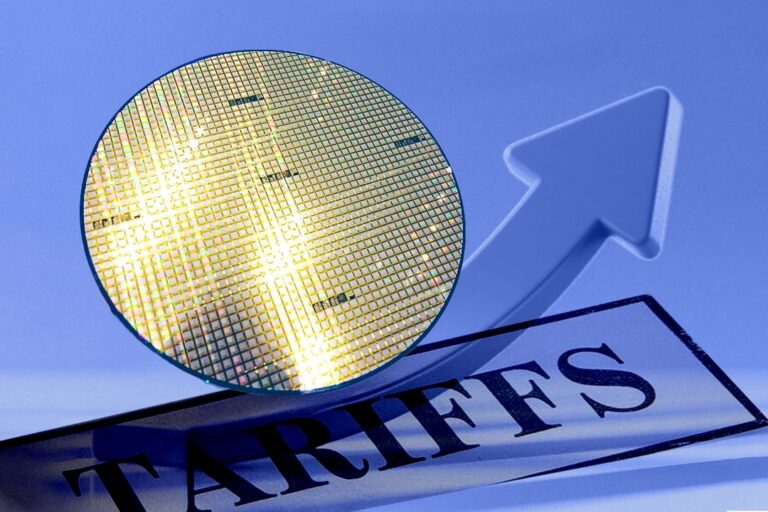
While most chipmakers have focused on making GPUs smaller and denser, Cerebras took a radically different approach: bigger is better. Its flagship product, the Wafer-Scale Engine (WSE), is the largest chip ever built, packing hundreds of thousands of cores onto a single silicon wafer. This monumental leap allows data to move across the chip at unprecedented speed, making it ideal for training the massive AI models that power generative tools, autonomous systems, and large language models.
Positioning in the AI Ecosystem
Cerebras’ innovations arrive at a moment when demand for computing power is exploding. Tech giants, research labs, and governments are all racing to access high-performance AI hardware. With systems like the Cerebras CS-2 and its distributed computing network Andromeda, the company has established partnerships with top institutions such as Argonne National Laboratory and G42 in Abu Dhabi. These collaborations underline its credibility and global relevance, two vital ingredients ahead of the Cerebras IPO.
In a world increasingly defined by data and automation, Cerebras represents the infrastructure behind intelligence itself, and that’s precisely why its upcoming public offering is being watched so closely.
The Timing Behind the Cerebras IPO: A New Era for AI Chip Innovation
Timing is everything in technology markets. The Cerebras IPO comes as the AI chip industry experiences a once-in-a-generation surge in demand. Global companies are investing billions into building AI infrastructure, and investors are shifting their attention from consumer apps to the hardware that makes AI possible.
A Market Hungry for Compute Power
Since 2023, the semiconductor sector has undergone dramatic change. Nvidia’s dominance in AI GPUs has created both opportunities and bottlenecks, especially amid global supply shortages and export restrictions. This environment gives Cerebras a strategic advantage: it offers a fundamentally different architecture that bypasses many of these constraints.
Investors are eager for diversification in the AI chip market, and Cerebras appears to be positioning itself as the prime alternative. By going public now, the company can capitalize on market enthusiasm for AI infrastructure while raising the funds needed to scale production and research.
Investor Confidence and Strategic Partnerships
Cerebras has already attracted significant venture capital backing, reportedly achieving valuations of nearly $4 billion. Its alliances with leading AI firms and research institutions add further validation. For potential investors, these partnerships signal that Cerebras’ technology isn’t just experimental; it’s commercially viable and globally deployable.
Moreover, the IPO’s timing coincides with a wider investor appetite for AI hardware plays. Following a series of software-focused IPOs that delivered mixed results, markets now favor tangible innovation in physical systems with measurable impact. Cerebras’ wafer-scale chips fit that bill perfectly.
Seizing the AI Infrastructure Moment
If successful, the Cerebras IPO could mark the beginning of a new era where infrastructure companies, rather than app developers, lead the next wave of AI growth. It’s a statement that the future of artificial intelligence lies not only in clever algorithms but in the hardware capable of running them at scale.
Cerebras Systems: Revolutionizing AI Hardware
At the heart of the Cerebras IPO story lies one word: scale. Cerebras Systems isn’t merely optimizing existing technologies; it’s reinventing how chips are built.
The Power of the Wafer-Scale Engine
Traditional processors are made by slicing silicon wafers into many smaller chips. Cerebras flipped this convention, keeping the wafer whole and transforming it into a single, enormous processor. The result the WSE-2 boasts 2.6 trillion transistors and 850,000 AI cores, dwarfing even the most powerful GPUs on the market.
This design eliminates inter-chip communication delays, enabling ultra-fast data flow and dramatically accelerating AI model training. Tasks that once took weeks on conventional hardware can now be completed in days or even hours.
From Supercomputers to Cloud Integration
Cerebras doesn’t stop at hardware. Its systems, such as Andromeda, connect multiple WSE chips across data centers, creating supercomputing performance accessible via the cloud. This makes wafer-scale computing available to researchers, startups, and enterprises without the need for costly infrastructure investments.
Such accessibility could democratise AI innovation, allowing more organizations to train models that previously required national-level computing power.
Challenging the GPU Status Quo
For years, Nvidia has been the default choice for AI training. But Cerebras’ approach challenges that dominance by providing an architecture specifically designed for large-scale deep learning. As industries push for faster, energy-efficient computation, Cerebras’ ability to deliver massive throughput with less complexity could be a turning point.
If the Cerebras IPO succeeds, it won’t just represent financial success; it will validate a new path forward for AI hardware, one built on bold engineering rather than incremental refinement.
Why Timing Matters for the Cerebras IPO
When it comes to IPOs, timing can make or break a company’s debut. For Cerebras Systems, the decision to go public is not just about raising capital; it’s about entering the market at the right moment, when investor appetite for AI hardware is soaring, and the world is eager for alternatives to dominant GPU providers like Nvidia.
A Surge in AI Infrastructure Demand
The global AI boom has transformed the semiconductor landscape. Since 2023, investments in AI chips and data infrastructure have skyrocketed as corporations and governments race to build large-scale AI capabilities. This environment gives Cerebras’ IPO impeccable timing the company’s wafer-scale chips directly address the industry’s hunger for high-performance computing solutions.
As AI adoption accelerates across healthcare, finance, and defense, the need for faster, more efficient processing has never been greater. Cerebras’ Wafer-Scale Engine (WSE) technology promises unparalleled speed for training massive AI models, giving it a unique edge right as market demand peaks.
Investor Interest and Economic Context
The semiconductor sector is one of the few areas thriving amid global economic uncertainty. With supply chains stabilizing and AI valuations climbing, institutional investors are looking for the next breakthrough player. Cerebras, with its proven hardware and strong partnerships, is perfectly positioned to benefit from this sentiment.
Moreover, the Cerebras IPO arrives as capital markets regain confidence in tech listings. After a quiet period for public offerings in 2022–2023, AI-driven companies like Arm Holdings and OpenAI-related ventures have revived enthusiasm. Cerebras’ entry adds fuel to that momentum, but it must manage expectations carefully to ensure sustainable growth beyond the hype.
The Strategic Advantage of Going Public Now
Timing also matters from an operational standpoint. Going public will enable Cerebras to raise funds for expanding manufacturing capacity and improving its supply chain resilience, both crucial for scaling wafer-scale production.
By listing during a period of intense AI investment, Cerebras can strengthen its position as a hardware innovator rather than a niche experimental player.
In short, the timing of the Cerebras IPO aligns perfectly with both market sentiment and industry needs, a combination that could make it one of the most impactful tech listings of the decade.
Challenges & Risks Ahead of the Cerebras IPO
Despite its impressive technology and momentum, the road to becoming a public company is not without challenges. Cerebras must navigate financial pressures, competitive landscapes, and execution risks that have tripped up even the most promising tech firms.
Scaling Production and Managing Costs
Cerebras’ greatest technological strength, its massive wafer-scale chip, is also its biggest manufacturing challenge. Producing such large chips with high yields requires sophisticated equipment, tight quality control, and substantial capital investment. Even minor defects can lead to costly losses.
Maintaining consistent production quality at scale will be critical after the Cerebras IPO, especially as investor expectations rise. The company must balance innovation with cost efficiency to avoid eroding margins in a highly competitive market.
Profitability Pressures and Investor Scrutiny
Public investors tend to be less forgiving than venture backers. Once listed, Cerebras will need to demonstrate clear revenue growth and a path to profitability, something many deep-tech hardware companies struggle with.
While demand for AI hardware is robust, pricing pressures and long sales cycles can impact cash flow. Cerebras must convince the market that its business model is sustainable and scalable, not solely reliant on research contracts or one-off deals.
Supply Chain and Regulatory Risks
Global semiconductor manufacturing still faces geopolitical and logistical risks. Export restrictions, particularly concerning high-end computing components, could complicate Cerebras’ international expansion. Additionally, reliance on specific foundries or suppliers might expose the company to bottlenecks or shortages.
Cerebras’ leadership will need to ensure diversification and resilience in its supply chain strategy key factors investors will evaluate post-IPO.
Competition and Market Dynamics
The Cerebras IPO doesn’t occur in a vacuum. The AI chip market is one of the most competitive spaces in technology, dominated by well-funded giants and aggressive start-ups alike. To succeed, Cerebras must position itself not only as an alternative to Nvidia but as an indispensable part of the broader AI infrastructure ecosystem.
Competing with Established Giants
Nvidia remains the undisputed leader in AI acceleration, controlling the majority of GPU-based training infrastructure worldwide. Meanwhile, AMD and Intel are heavily investing in their own AI-optimized chips, and cloud providers like Google (TPU) and Amazon (Inferentia) are building in-house solutions.
Against this backdrop, Cerebras stands out with its wafer-scale innovation, but it must continue to prove that this architecture can scale commercially and outperform in real-world deployments. Its success will depend on showing consistent results across diverse workloads, not just benchmarks.
Emerging Start-Ups and Custom Silicon
Beyond the established players, a new generation of AI chip start-ups, including Graphcore, Groq, and SambaNova Systems, are also fighting for market share. Many of these companies, like Cerebras, promote specialized architectures tailored to AI.
To stay ahead, Cerebras must differentiate not only through speed but also software ecosystem support and ease of integration. The launch of Cerebras Cloud was a strategic move in that direction, enabling developers to access its hardware without the upfront cost of physical systems.
Market Outlook and Long-Term Vision
Despite fierce competition, the total addressable market for AI compute continues to grow at double-digit rates annually. The Cerebras IPO thus comes at a time when even a modest market share can translate into billions in revenue.
If Cerebras can maintain its pace of innovation, scale production efficiently, and build strong industry partnerships, it could become a defining player in the post-GPU era. However, execution will be key marto ket reward results, not just potential.
Implications of the Cerebras IPO for the AI and Semiconductor Industry
The Cerebras IPO is more than just another tech listing; it represents a potential turning point for the global semiconductor and AI industries. In a world where artificial intelligence is reshaping everything from healthcare to defense, the hardware powering that revolution has become just as crucial as the algorithms running on it. Cerebras Systems, with its groundbreaking wafer-scale chip technology, is poised to redefine what’s possible in AI computation. But beyond its own success, its public debut carries broader implications for innovation, competition, and investment in the semiconductor sector.
Reframing the AI Hardware Landscape
Cerebras’ decision to go public signifies a deeper shift in how the market views AI infrastructure. Until recently, most investor attention focused on software companies and AI applications, from language models to generative design tools. However, the Cerebras IPO brings attention back to the foundational layer: the silicon that makes AI run.
By challenging the dominance of GPU-based architectures, Cerebras is reframing industry expectations. Its Wafer-Scale Engine (WSE) enables massive computational throughput, allowing AI models to train in hours instead of weeks. This technology could set new benchmarks for performance and efficiency, pushing competitors like Nvidia, AMD, and Intel to innovate faster.
The IPO also sends a signal that hardware-first innovation is not only viable but vital in the AI age. If Cerebras succeeds post-listing, it may inspire a new wave of investment into semiconductor start-ups developing bold, unconventional architectures.
Stimulating Investment in Deep Tech
The semiconductor sector has always been capital-intensive, often discouraging new entrants. But the Cerebras IPO could reinvigorate investor confidence in deep tech ventures. Public success would validate the business case for long-term, high-risk innovation, the kind needed to push computational limits.
We’ve already seen growing interest from sovereign funds, venture capitalists, and institutional investors in AI chipmakers. A strong market performance by Cerebras could accelerate this trend, leading to increased funding for AI accelerators, quantum processors, and neuromorphic chips. In essence, Cerebras’ move could help shift global investment strategies towards infrastructure-based AI growth, not just software.
Implications for Global Semiconductor Competition
The semiconductor industry is not only about technology but also geopolitics. Nations are competing fiercely to secure chip production capabilities and ensure technological sovereignty. Cerebras’ innovations and its upcoming IPO align closely with this global race.
Its partnerships with research institutions like Argonne National Laboratory in the US and G42 in the UAE position it as a critical player in international AI infrastructure. As countries invest billions in national AI programs, Cerebras’ technology could become part of the backbone that powers them.
This IPO could therefore spark new alliances and supply chain collaborations, reinforcing the strategic role of semiconductor firms in global competitiveness.
Accelerating the AI Compute Economy
The Cerebras IPO also has direct implications for the economics of AI computing. As models grow in complexity, computing costs have become a limiting factor for innovation. Cerebras’ hardware promises to dramatically reduce those costs through speed and efficiency gains.
This could democratise access to large-scale AI capabilities, empowering smaller firms, universities, and research labs to work on advanced models without needing billion-dollar budgets. The ripple effect could be enormous: faster model training, lower energy consumption, and broader AI accessibility.
Frequently Asked Questions (FAQ)
What is the Cerebras IPO?
The Cerebras IPO refers to the anticipated initial public offering of Cerebras Systems, an AI hardware company known for its revolutionary Wafer-Scale Engine (WSE), the largest and most powerful AI chip ever built. The IPO will allow Cerebras to raise capital and expand its reach in the fast-growing semiconductor and AI industries.
Why is the Cerebras IPO considered important?
It’s significant because Cerebras could become one of the first major hardware-first AI companies to go public in the post-GPU era. The IPO marks a shift in investor focus from AI software and applications to AI infrastructure and chip innovation, which are crucial for powering large-scale AI models.
How does Cerebras Systems differ from Nvidia or AMD?
Unlike Nvidia and AMD, which rely on GPU clusters, Cerebras builds a single, massive processor, the Wafer-Scale Engine, capable of handling huge AI workloads on one chip. This design dramatically reduces latency and energy use while boosting speed and scalability.
When is the Cerebras IPO expected to take place?
As of now, Cerebras Systems hasn’t officially announced its IPO date, but market analysts expect it could occur once market conditions remain favorable for AI infrastructure investments. The company’s growing partnerships and commercial adoption suggest it’s preparing for that milestone soon.
What impact could the Cerebras IPO have on the semiconductor market?
The Cerebras IPO could influence both investors and competitors by validating deep-tech innovation in chip design. It may also encourage funding for other AI hardware start-ups and intensify competition among major players in the semiconductor and AI computing industries.
What industries will benefit most from Cerebras’ technology?
Cerebras’ wafer-scale systems are designed for heavy AI workloads such as scientific research, drug discovery, natural language processing, and climate modeling. Any sector requiring rapid, large-scale computation could benefit from its technology.
Conclusion: The Significance of the Cerebras IPO
The Cerebras IPO marks a milestone moment not only for the company but for the trajectory of artificial intelligence itself. It symbolizes the growing recognition that the next wave of AI progress will depend on hardware innovation as much as software ingenuity.