




Nano Tech AI: The Future of Intelligent Nanotechnology
Nano Tech AI is rapidly emerging as one of the most transformative innovations of the 21st century. By combining nanotechnology with artificial intelligence, researchers and industries are unlocking new possibilities in medicine, electronics, energy, and environmental science. This powerful integration enables smarter materials, faster discoveries, and more efficient systems at the atomic and molecular levels.
What Is Nanotechnology?
Nanotechnology is the science and engineering of materials at the nanoscale, typically between 1 and 100 nanometers. At this scale, materials exhibit unique physical, chemical, and biological properties that differ significantly from their bulk counterparts.
Institutions like the National Nanotechnology Initiative define nanotechnology as the manipulation of matter with atomic precision to create innovative materials and devices. Applications range from targeted drug-delivery systems to ultra-strong, lightweight materials and high-performance electronics.
What Is Artificial Intelligence?
Artificial Intelligence (AI) refers to computer systems that can perform tasks that normally require human intelligence. These tasks include learning, pattern recognition, decision-making, and predictive analysis.
Modern AI technologies such as machine learning and deep learning enable systems to analyze vast datasets, detect patterns, and optimize outcomes. Organizations like OpenAI have accelerated AI development, making it a powerful tool for scientific research and industrial innovation.
The Convergence of Nano Tech and AI
The convergence of nanotech and AI allows scientists to design, test, and optimize nanomaterials far more efficiently than traditional methods. Instead of relying solely on trial-and-error experimentation, AI algorithms can simulate millions of molecular interactions in minutes.
This synergy results in faster innovation cycles, reduced costs, and groundbreaking discoveries. Nano Tech AI represents a shift from manual experimentation to intelligent automation at the smallest scales of matter.
How Nano Tech AI Works
Understanding how Nano Tech AI works requires exploring how AI tools interact with nanoscale research and manufacturing processes.
AI-Powered Nanomaterial Discovery
Traditionally, discovering new nanomaterials involved years of experimentation. With AI-powered platforms, researchers can predict material properties before they are physically created.
Machine learning models analyze datasets of known materials to identify patterns and suggest new compounds with desired characteristics such as higher conductivity, better strength, or improved biocompatibility. This dramatically shortens research timelines.
Machine Learning in Molecular Modeling
Molecular modeling simulates how atoms and molecules interact. AI enhances this process by identifying complex patterns in atomic structures and predicting how changes will impact performance.
Advanced algorithms can forecast chemical stability, toxicity, and efficiency, helping scientists avoid costly laboratory failures. This is particularly important in drug development and advanced materials engineering.
Smart Nanosensors and Real-Time Data Processing
Nano Tech AI also powers intelligent nanosensors capable of detecting minute changes in temperature, pressure, or chemical composition. These sensors generate massive amounts of real-time data.
AI systems process this information instantly, enabling predictive maintenance in manufacturing, early disease detection in healthcare, and environmental monitoring in real-world settings.
Automation in Nano Manufacturing
Manufacturing at the nanoscale requires extreme precision. AI-driven robotics and automated systems ensure consistent quality and minimize defects.
By analyzing production data, AI can adjust parameters in real time, improving yield and reducing waste. This automation is critical for scaling nano innovations from laboratory prototypes to commercial products.
Key Applications of Nano Tech AI
Nano Tech AI is already reshaping multiple industries with practical, high-impact solutions.
Healthcare and Precision Medicine
In healthcare, Nano Tech AI enables targeted drug delivery systems that release medication precisely where needed, reducing side effects and improving treatment outcomes.
AI-designed nanoparticles are being explored for cancer therapy, diagnostics, and regenerative medicine. These intelligent systems can detect abnormalities at early stages, offering new hope for personalized treatment strategies.
Electronics and Smart Devices
Nano Tech AI contributes to smaller, faster, and more energy-efficient electronic components. AI-designed semiconductors and nanochips enhance processing power while reducing energy consumption.
This advancement supports the development of wearable devices, smart sensors, and next-generation computing technologies.
Energy Storage and Renewable Solutions
Energy innovation is another critical application. AI helps design advanced nanomaterials for batteries and solar panels, increasing energy density and improving efficiency.
By optimizing material composition at the atomic level, Nano Tech AI supports longer-lasting batteries and more effective renewable energy systems key components of a sustainable future.
Environmental Monitoring and Sustainability
Nano Tech AI plays a vital role in environmental protection. Smart nanosensors detect pollutants in air and water with exceptional sensitivity.
AI analyzes this data to identify contamination sources and predict environmental risks. Additionally, nanomaterials designed with AI assistance are used in water purification and carbon capture technologies, supporting global sustainability goals.
Benefits of Nano Tech AI
The integration of nanotechnology and AI delivers numerous advantages across research and industry.
Faster Research and Development
AI accelerates experimentation by simulating complex molecular interactions digitally. This reduces the time required to bring innovations from concept to commercialization.
Enhanced Precision at the Atomic Level
Nano Tech AI enables unprecedented control over atomic structures. This precision leads to stronger materials, safer medical treatments, and more reliable electronic components.
Cost Efficiency and Scalability
By reducing trial-and-error experimentation and minimizing production waste, Nano Tech AI lowers development and manufacturing costs. Automation further enhances scalability for large-scale industrial applications.
Improved Product Performance
Products developed with Nano Tech AI often outperform traditional alternatives. Whether it’s longer-lasting batteries, more accurate medical diagnostics, or highly sensitive environmental sensors, intelligent nanotechnology enhances overall performance and reliability.
Challenges and Ethical Considerations
While Nano Tech AI offers immense potential, it also presents complex scientific, regulatory, and ethical issues that must be addressed for sustainable growth.
Safety and Toxicity Concerns
Nanomaterials behave differently from larger-scale materials. Their tiny size allows them to penetrate biological systems more easily, raising concerns about toxicity and long-term environmental impact.
For example, nanoparticles used in medicine or manufacturing could potentially accumulate in the human body or ecosystems. Organizations such as the National Institute of Environmental Health Sciences actively study nanomaterial safety to assess health risks.
When AI accelerates nanomaterial discovery, safety testing must keep pace. Rapid innovation should not outstrip toxicological research, making risk assessment a top priority in Nano Tech AI development.
Regulatory and Compliance Issues
Regulation of nanotechnology varies across countries, and integrating AI adds another layer of complexity. Governments and regulatory bodies are still working to establish consistent frameworks for nano-enabled products.
In the United States, agencies like the U.S. Food and Drug Administration evaluate nano-based medical treatments for safety and effectiveness. However, AI-designed materials may challenge traditional approval processes because algorithms can generate novel compounds faster than regulations evolve.
Global harmonization of nano and AI standards remains a challenge, requiring collaboration between policymakers, scientists, and industry leaders.
Data Privacy and Security Risks
Nano Tech AI systems rely heavily on data—especially in healthcare and smart manufacturing. Sensitive medical records, environmental data, and industrial designs must be protected from breaches.
AI-driven nanosensors that collect real-time health or environmental information could pose privacy risks if improperly managed. Secure data storage, encryption, and ethical data governance are critical components of responsible Nano Tech AI deployment.
Ethical Use of AI in Nanotechnology
The ethical use of AI in nanotechnology extends beyond data privacy. Questions arise about algorithmic bias, transparency, and accountability.
If AI models are trained on incomplete or biased datasets, they may produce flawed material designs or medical predictions. Ethical guidelines—such as those promoted by the World Health Organization for AI in healthcare—highlight the importance of fairness, explainability, and human oversight.
Responsible innovation requires balancing rapid technological progress with societal well-being and environmental sustainability.
Nano Tech AI vs Traditional Nanotechnology

To understand the true value of Nano Tech AI, it helps to compare it with traditional nanotechnology approaches.
Key Differences in Approach
Traditional nanotechnology relies heavily on laboratory experimentation and manual simulations. Scientists test materials through repeated trials, which can take years.
Nano Tech AI, in contrast, uses machine learning algorithms to predict outcomes before physical experiments begin. AI analyzes vast datasets of chemical properties and molecular behaviors, dramatically reducing the need for trial-and-error testing.
This shift from reactive experimentation to predictive modeling represents a fundamental transformation in research methodology.
Performance and Efficiency Comparison
Nano Tech AI significantly improves performance and efficiency. AI-driven molecular simulations can process millions of potential material combinations in hours rather than months.
Traditional methods often require extensive physical prototyping, increasing costs and time-to-market. In comparison, AI-enhanced systems optimize materials digitally, leading to faster innovation cycles and more accurate results.
The integration of automation also reduces human error and enhances precision at the atomic level.
Commercial Viability and Market Potential
From a business perspective, Nano Tech AI offers greater scalability. Companies can accelerate product development while minimizing research expenses.
Industries such as pharmaceuticals, semiconductors, and renewable energy are investing heavily in AI-driven nanotechnology to maintain competitive advantages. While traditional nanotechnology remains valuable, AI integration enhances commercial viability by shortening development timelines and improving product performance.
As global demand for advanced materials grows, Nano Tech AI is expected to capture a larger share of the nanotechnology market.
Future Trends in Nano Tech AI
The future of Nano Tech AI promises groundbreaking innovations that could redefine entire industries.
AI-Designed Nanobots
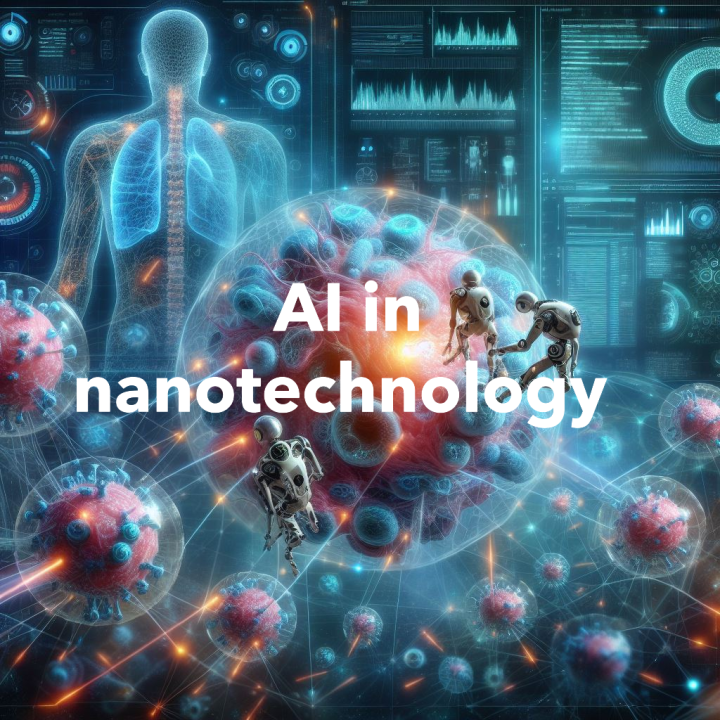
One of the most exciting developments is the creation of AI-designed nanobots. These microscopic machines could navigate the human body to deliver drugs, repair tissues, or detect diseases at early stages.
Researchers at institutions like Massachusetts Institute of Technology are exploring advanced nanorobotics combined with AI algorithms. Although still in early stages, such technologies could revolutionize precision medicine.
Self-Healing and Smart Materials
AI-driven nanomaterials are being engineered to repair themselves after damage. These self-healing materials could be used in aerospace, construction, and electronics, reducing maintenance costs and extending product lifespans.
Smart materials that adapt to environmental conditions—such as temperature or pressure changes—are also emerging as a major trend in Nano Tech AI.
Integration with Quantum Computing
Quantum computing has the potential to further enhance Nano Tech AI by solving highly complex molecular simulations. Companies like IBM are developing quantum systems that could dramatically increase computational power.
When combined with AI, quantum technology may enable even more precise modeling of nanoscale interactions, accelerating breakthroughs in chemistry and materials science.
Role in Industry 5.0
Industry 5.0 emphasizes collaboration between humans and intelligent machines. Nano Tech AI fits perfectly within this vision by enabling smart factories, autonomous production systems, and highly personalized products.
In this new industrial era, AI-enhanced nanotechnology will support sustainable manufacturing, energy efficiency, and advanced automation.
Frequently Asked Questions About Nano Tech AI
Is Nano Tech AI Safe?
Nano Tech AI can be safe when proper safety protocols, regulatory oversight, and ethical guidelines are followed. Ongoing toxicology research and AI transparency are essential to minimizing risks.
What Industries Benefit Most?
Healthcare, electronics, renewable energy, environmental science, aerospace, and advanced manufacturing are among the industries benefiting most from Nano Tech AI innovations.
What Skills Are Needed for Careers?
Careers in Nano Tech AI require interdisciplinary expertise, including nanotechnology, data science, machine learning, materials science, and regulatory compliance knowledge. Programming skills and research experience are also highly valuable.
What Is the Future Outlook?
The future outlook for Nano Tech AI is highly promising. As AI algorithms become more advanced and nanotechnology research expands, the integration of these fields will drive faster discoveries, smarter materials, and sustainable solutions.
With responsible innovation and global collaboration, Nano Tech AI is poised to become a cornerstone of next-generation technology and industrial transformation.