





Simple Definition of CNC and CNC Machining
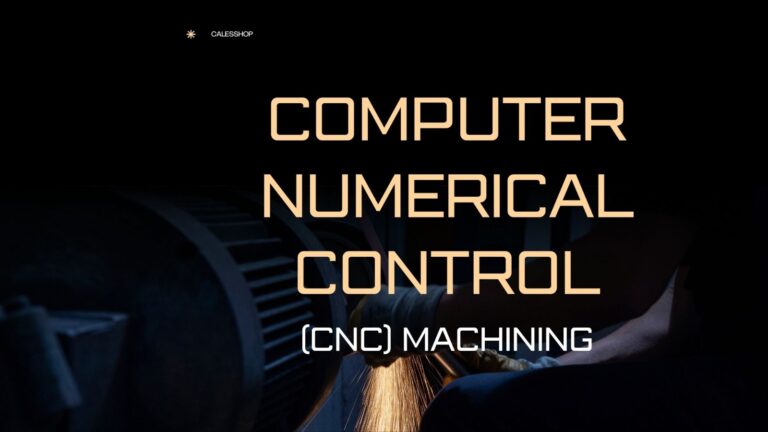
Computer Numerical Control (CNC) machining is a modern manufacturing process that uses computerized commands to control machines and tools with high precision. Instead of relying on manual operation, CNC systems translate digital designs into detailed instructions that guide cutting tools, lathes, mills, or routers.
In simple terms, CNC machining automates manufacturing through coded commands (G-code) that tell the machine how to move, cut, and shape materials. This process allows manufacturers to produce complex parts with exceptional accuracy and consistency, making it an essential technology in industries like aerospace, automotive, electronics, and healthcare.
Brief History and Evolution of CNC Technology
The origins of CNC machining date back to the 1940s and 1950s, when engineers first experimented with punched tape systems to control machines automatically. The concept evolved rapidly during the 1960s as computers became more powerful and affordable, leading to the first true computer-controlled milling machines.
By the 1970s and 1980s, CNC technology was being adopted globally across major manufacturing sectors. The introduction of CAD (Computer-Aided Design) and CAM (Computer-Aided Manufacturing) software revolutionized the process, allowing digital designs to be converted directly into machine instructions.
Today, CNC machining is the backbone of Industry 4.0, where smart factories combine AI, IoT, and automation to optimize production speed, quality, and efficiency. The evolution of CNC continues as hybrid machines and cloud-connected systems redefine what’s possible in modern manufacturing.
How CNC Machining Works
Step-by-Step Process (Design, Programming, Cutting)
CNC machining follows a structured, step-by-step workflow that ensures precise results:
Designing the Part
The process begins with engineers creating a digital 3D model using CAD software. This model defines the exact dimensions and geometry of the component.
Programming the Machine
The design is then imported into CAM software, which converts it into G-code, the programming language CNC machines use to operate. These codes specify cutting paths, tool movements, speed, and depth.
Machine Setup
Operators secure the raw material (metal, plastic, or composite) onto the machine bed and select appropriate tools for the job.
Machining and Cutting
Once the program is loaded, the CNC machine performs automated cutting, drilling, milling, or turning. Each movement is controlled precisely by the software, resulting in highly accurate and repeatable parts.
Finishing and Quality Check
After machining, parts may undergo finishing operations such as polishing or coating. The final inspection ensures that each part meets exact specifications before shipment.
This automated workflow minimizes human error while maximizing speed and efficiency the main reasons CNC machining has become an industry standard.
The Role of CAD/CAM Software and G-Code
At the heart of CNC machining lies CAD/CAM integration and G-code programming.
- CAD (Computer-Aided Design) allows engineers to create detailed 2D and 3D digital models.
- CAM (Computer-Aided Manufacturing) takes those designs and generates the instructions required for the machine to produce them.
G-code, the programming language of CNC, tells the machine where to move, how fast, and how deep to cut. Every line of code controls a specific action, such as tool positioning, spindle speed, or feed rate.
Together, CAD, CAM, and G-code form a seamless digital-to-physical workflow that ensures accuracy, efficiency, and flexibility across all stages of production.
Types of CNC Machines
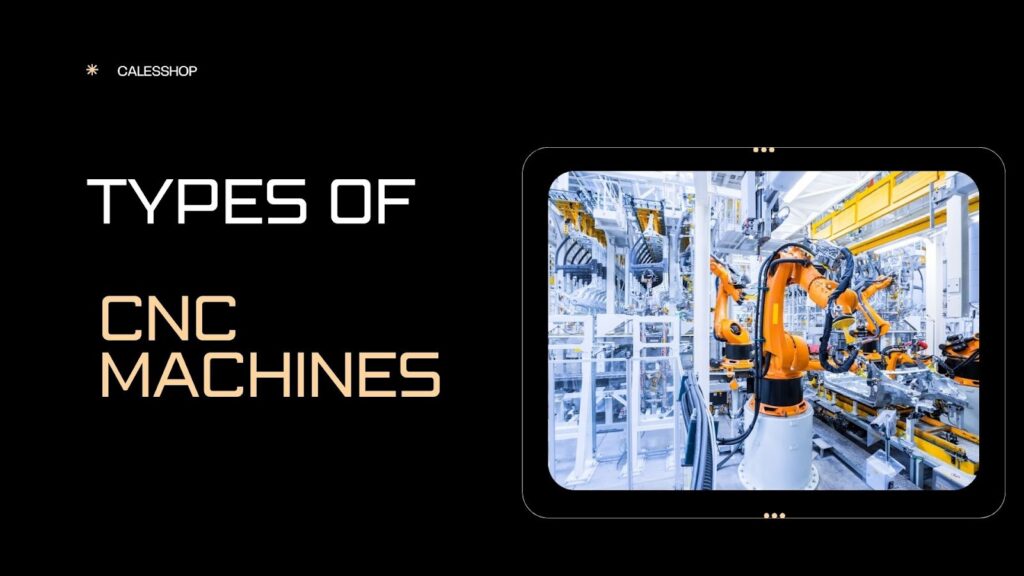
CNC Milling Machines
CNC milling machines are among the most widely used CNC tools. They use rotating cutting tools to remove material from a solid block, creating intricate shapes and surfaces.
These machines are ideal for precision parts, including engine components, molds, and prototypes. Modern CNC mills can operate on multiple axes (3-, 4-, or 5-axis), allowing them to cut complex geometries in a single setup.
Their versatility and accuracy make CNC milling machines a cornerstone of manufacturing in industries ranging from aerospace to consumer electronics.
CNC Lathes
CNC lathes, also known as CNC turning centers, are designed to produce cylindrical or round parts. The workpiece rotates while the cutting tool remains stationary, shaping the material into desired forms.
They are ideal for creating shafts, bolts, fittings, and custom metal parts. With automated tool changers and multi-axis capabilities, CNC lathes can perform multiple operations like cutting, drilling, and threading in a single run.
This makes them highly efficient for mass production and consistent part quality.
CNC Routers and Plasma Cutters
CNC routers are primarily used for cutting wood, plastics, composites, and soft metals. They’re common in industries such as furniture manufacturing, signage, and architectural modeling. CNC routers are valued for their ability to cut smooth, detailed designs quickly and precisely.
On the other hand, CNC plasma cutters use a high-temperature plasma arc to slice through metals like steel or aluminum. These machines are ideal for applications requiring clean, fast cuts on conductive materials.
Both routers and plasma cutters showcase the adaptability of CNC technology, offering speed, precision, and customization across different materials and industries.
Advantages of CNC Machining
Precision and Repeatability
One of the biggest advantages of CNC (Computer Numerical Control) machining is its unmatched precision and repeatability. Unlike manual machining, which depends heavily on operator skill, CNC systems are programmed to execute exact instructions often down to thousandths of a millimeter.
This precision is vital in industries like aerospace, automotive, and medical manufacturing, where even a tiny deviation can cause performance or safety issues. Once a digital design is finalized, CNC machines can reproduce identical parts repeatedly with zero variation. This makes them ideal for mass production runs and quality consistency across batches.
The repeatability of CNC machining also improves product reliability. When every part meets the same standard, it ensures a perfect fit, balance, and function, no matter how complex the design.
Speed and Scalability
CNC machining also offers exceptional speed and scalability compared to traditional methods. Once a program is set up, CNC machines can run continuously 24/7, producing parts far faster than manual labor ever could.
High-speed spindles, tool changers, and automated feeding systems enable CNC machines to handle multiple processes, including cutting, drilling, and shaping, without interruption. Manufacturers can scale production instantly by simply running more machines or extending hours without increasing the workforce.
This speed translates directly into faster delivery times, improved productivity, and greater competitiveness in industries that rely on tight deadlines, such as electronics or automotive manufacturing.
Cost Efficiency and Reduced Errors
While CNC machines may require higher upfront investment, their long-term cost efficiency is undeniable. Automation reduces the need for manual operators, minimizing labor costs and human-related errors.
Once programmed, CNC systems follow exact instructions, which drastically cuts down on material waste, rework, and defective parts. This consistency leads to significant savings over time.
Additionally, CNC machines require minimal supervision and can operate overnight or during weekends, maximizing output with minimal downtime. By reducing scrap rates, labor expenses, and reprocessing, CNC machining provides one of the best cost-to-output ratios in modern manufacturing.
With fewer mistakes and less waste, companies can maintain higher profit margins while delivering superior-quality products.
CNC Machining Applications
Automotive and Aerospace Industries
CNC machining is a cornerstone of automotive and aerospace production, where precision and reliability are non-negotiable.
In the automotive sector, CNC machines are used to create complex parts such as engine blocks, brake systems, transmission housings, and customized interior components. The ability to produce identical parts quickly ensures efficient assembly lines and consistent vehicle performance.
Meanwhile, in the aerospace industry, CNC machining enables the creation of lightweight yet strong components, including turbine blades, wing sections, and landing gear parts. Aerospace parts must meet strict safety and performance standards, and CNC technology ensures they are manufactured with microscopic accuracy.
The high precision, repeatability, and ability to handle advanced materials like titanium and carbon composites make CNC machining indispensable to both industries.
Medical, Electronics, and Manufacturing Uses
Beyond cars and airplanes, CNC machining has become essential in medical technology, electronics, and general manufacturing.
In the medical field, CNC machines produce components such as surgical tools, orthopedic implants, and prosthetic devices. These parts require exact dimensions and smooth finishes to ensure safety and performance, something CNC machining delivers consistently.
In electronics, CNC machining supports the production of device casings, heat sinks, and intricate circuit housings for smartphones, computers, and semiconductors. The precision of CNC tools is key to working with fragile materials like aluminum and composites.
In general manufacturing, CNC machining is used for prototyping, metal fabrication, and large-scale industrial equipment. Its flexibility allows manufacturers to shift between small-batch custom work and mass production efficiently.
The technology’s accuracy, versatility, and automation make it a perfect fit across industries that demand consistency, quality, and speed.
CNC vs Traditional Machining
Key Differences in Operation and Output
Traditional machining relies heavily on manual control; human operators adjust levers, handles, and tools to shape materials. In contrast, CNC machining automates the entire process, using computer-generated instructions to guide every movement of the cutting tool.
This automation leads to dramatic improvements in precision, speed, and safety. CNC machines can cut complex geometries that manual tools cannot achieve, with accuracy measured in microns. Traditional machining, while useful for simple or custom one-off parts, lacks the scalability and consistency needed for modern production demands.
CNC machining also minimizes the risk of human error, allowing for uniform output even in high-volume production. The result: higher efficiency, fewer defects, and faster turnaround times compared to traditional manual machining.
Which One is Better for Modern Production
For today’s competitive and automated manufacturing environment, CNC machining is clearly superior. While traditional machining still has its place for small, custom, or artistic projects, CNC systems dominate when precision, efficiency, and scalability are priorities.
Modern production requires consistent quality, rapid output, and flexibility, all of which CNC technology delivers. It integrates seamlessly with digital design software, AI-driven predictive maintenance, and IoT-enabled smart factories.
As industries shift toward Industry 4.0, CNC machining is not just an advantage but a necessity. Its ability to combine automation, digital control, and precision engineering ensures that manufacturers remain competitive in an increasingly high-tech, data-driven world.
Future of CNC Technology
Integration with AI and IoT
The future of CNC (Computer Numerical Control) technology is being reshaped by two powerful forces: Artificial Intelligence (AI) and the Internet of Things (IoT). Together, these technologies are transforming traditional CNC machines into intelligent, data-driven systems that can think, learn, and adapt.
AI integration enables CNC machines to move beyond fixed programming. Instead of following static instructions, AI-powered CNC systems can analyze data, predict tool wear, optimize cutting parameters, and make real-time decisions. For example, machine learning algorithms can detect subtle vibration patterns or temperature changes and adjust feed rates automatically, minimizing downtime and improving precision.
The Internet of Things (IoT) enhances this evolution by connecting CNC machines to a centralized network. Through embedded sensors and cloud platforms, CNC equipment continuously transmits data about performance, material conditions, and energy use. This connectivity allows manufacturers to monitor operations remotely, schedule predictive maintenance, and improve efficiency through real-time insights.
When AI and IoT work together, CNC machining becomes a smart, self-optimizing system. A machine can not only detect an impending fault but also recommend or even execute corrective actions. This level of intelligence results in higher productivity, lower costs, and greater sustainability, redefining how modern factories operate.
Smart Factories and Automation Trends
The rise of smart factories marks a major shift in global manufacturing, and CNC machining lies at the heart of this transformation. A smart factory leverages digital connectivity, automation, and data analytics to create highly efficient and flexible production systems, a core principle of Industry 4.0.
In such environments, CNC machines are no longer isolated tools; they are interconnected, automated assets communicating with other equipment, robots, and software systems in real time. This seamless integration enables end-to-end manufacturing automation, from design and simulation to cutting and finishing.
One of the most significant automation trends is robotic-assisted CNC machining. Robots can load raw materials, change tools, and unload finished parts without human involvement. This combination reduces manual labor, increases uptime, and allows production to continue around the clock.
Furthermore, digital twins, virtual replicas of CNC systems, are becoming a game-changer. These digital models simulate machining operations before they happen, identifying inefficiencies, potential collisions, or programming errors in advance. By testing and refining processes digitally, manufacturers save time, reduce waste, and enhance accuracy.
Cloud-based CNC monitoring is another rising trend. Manufacturers can now access performance dashboards from anywhere in the world, compare production data across facilities, and implement data-driven improvements instantly.
In short, smart factories powered by AI, IoT, and advanced CNC systems are enabling a new era of intelligent, autonomous production faster, safer, and more cost-effective than ever before.
Conclusion

Summary of CNC’s Importance in Manufacturing
CNC machining has long been a cornerstone of precision manufacturing, providing accuracy, repeatability, and flexibility that manual methods can’t match. From aerospace and automotive components to electronics and medical devices, CNC systems ensure that every part meets exact specifications, every time.
The integration of digital technologies has elevated CNC machining from a mechanical process to a strategic manufacturing solution. It now plays a key role in driving productivity, ensuring quality control, and reducing waste in production cycles.
Moreover, CNC machining supports mass customization, allowing manufacturers to efficiently produce small batches of highly customized products without sacrificing speed or consistency, a growing trend in today’s global markets.
As industries continue to digitize, the adaptability of CNC systems makes them indispensable to modern production environments. Their ability to integrate with AI, IoT, robotics, and analytics ensures they remain a central pillar in the evolution of smart manufacturing.
Why It Remains Vital to Industry 4.0
The world is entering the era of Industry 4.0, a new industrial revolution defined by automation, connectivity, and intelligence. CNC technology is at the core of this transformation because it embodies all three principles.
By merging computer control, AI-driven optimization, and real-time IoT connectivity, CNC machining ensures that production lines are not just automated but also self-aware and adaptive. Machines can predict maintenance needs, adjust performance dynamically, and share data across the production ecosystem, creating a truly smart manufacturing network.
In Industry 4.0, success depends on agility and data-driven decision-making. CNC machines provide both. Whether producing complex aerospace parts or consumer electronics, these systems deliver unmatched precision, minimal error rates, and seamless integration with other digital tools.
Another key advantage is sustainability. With advanced monitoring and AI-guided optimization, CNC systems minimize material waste and energy use, supporting global goals for greener manufacturing.
Ultimately, CNC technology is not just keeping up with Industry 4.0; it’s driving it. The combination of automation, intelligence, and connectivity ensures CNC machining remains vital to the factories of the future.
Manufacturers that embrace these innovations will benefit from faster production cycles, predictive insights, and enhanced competitiveness. As CNC machines become smarter, their impact on global manufacturing will only deepen, shaping the next generation of industrial excellence.
FAQs About CNC Machining

What materials can be used in CNC machining?
CNC machining works with a wide range of materials, including metals (aluminum, steel, titanium), plastics, wood, and composites.
What are the main advantages of CNC machining?
CNC machining offers high accuracy, repeatability, faster production, reduced human error, and the ability to create complex designs.
What industries commonly use CNC machining?
Industries such as aerospace, automotive, medical, electronics, construction, and manufacturing widely use CNC machining.
Is CNC machining suitable for small-scale production?
Yes, CNC machining is ideal for both prototyping and small-batch production due to its precision and cost efficiency.