
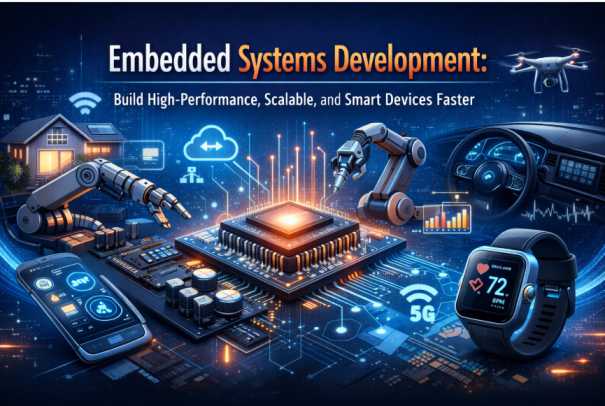






Edge AI is rapidly transforming how artificial intelligence is deployed, moving intelligence closer to where data is generated. Instead of relying solely on centralized cloud servers, edge AI enables real-time processing on devices such as sensors, cameras, smartphones, and industrial machines. This shift is driving faster decision-making, improved privacy, and lower operational costs. Below is a detailed look at the latest edge AI news, trends shaping the future, and real-world use cases across industries.
Latest Edge AI News and Updates
Recent Breakthroughs in Edge AI Technology
Recent edge AI news highlights major breakthroughs in model efficiency and performance. Researchers and companies are developing lightweight AI models capable of running complex tasks such as computer vision, speech recognition, and anomaly detection directly on edge devices. Advances in model compression, federated learning, and energy-efficient inference are making edge AI viable even for low-power devices, accelerating adoption across consumer and enterprise applications.
Edge AI Chipsets, Hardware, and Processors News
Hardware innovation is a major driver of edge AI growth. New AI accelerators, NPUs, and specialized edge processors are delivering higher performance per watt, enabling real-time inference without constant cloud connectivity. Semiconductor companies are focusing on scalable edge AI chips optimized for vision, audio, and sensor data, helping industries deploy AI at scale while reducing latency and bandwidth costs.
Funding, Mergers, and Acquisitions in Edge AI
Investment activity in edge AI remains strong. Startups building edge AI platforms, smart sensors, and on-device analytics solutions continue to attract funding. At the same time, larger tech firms are acquiring niche edge AI companies to strengthen their hardware-software ecosystems. These mergers and acquisitions signal long-term confidence in edge AI as a foundational technology.
Edge AI Trends Shaping the Future
Rise of On-Device and Real-Time AI Processing
One of the most important edge AI trends is the shift toward fully on-device intelligence. Applications such as facial recognition, voice assistants, and industrial monitoring require instant responses, which cloud-based AI cannot always deliver. Real-time edge AI processing minimizes delays, improves reliability, and supports mission-critical use cases where milliseconds matter.
Edge AI and IoT Integration Trends
Edge AI and the Internet of Things (IoT) are increasingly intertwined. Smart devices now analyze data locally instead of sending raw information to the cloud. This trend is driving smarter factories, connected homes, and intelligent infrastructure. By combining edge AI with IoT, organizations can reduce data transmission costs while gaining faster, more actionable insights.
Edge AI Powered by 5G and Low-Latency Networks
The rollout of 5G is accelerating edge AI adoption. Low-latency networks enable faster communication between edge devices, local servers, and the cloud. This combination supports advanced use cases such as autonomous vehicles, smart traffic systems, and augmented reality, where real-time AI processing and ultra-fast connectivity are essential.
Edge AI News by Industry
Edge AI in Healthcare and Medical Devices
In healthcare, edge AI is improving diagnostics, patient monitoring, and medical imaging. Wearable devices and portable diagnostic tools can analyze data locally, providing faster alerts and reducing reliance on constant internet connectivity. This is particularly valuable in remote or resource-limited environments where cloud access may be unreliable.
Edge AI in Automotive and Autonomous Systems
The automotive industry is a major adopter of edge AI. Self-driving cars, advanced driver-assistance systems (ADAS), and fleet management solutions rely on edge AI to process sensor data in real time. By keeping AI processing on the vehicle, manufacturers improve safety, reduce latency, and ensure systems function even when network connectivity is limited.
Edge AI in Manufacturing and Smart Factories
Manufacturing continues to lead in edge AI adoption. Smart factories use edge AI for predictive maintenance, quality control, and process optimization. Machines equipped with edge AI can detect anomalies instantly, reduce downtime, and improve productivity without sending sensitive operational data to the cloud.
Edge AI in Retail, Smart Cities, and Surveillance
Retailers and city planners are leveraging edge AI for customer analytics, traffic monitoring, and public safety. Smart cameras and sensors analyze data locally to count foot traffic, detect incidents, and optimize resource usage. Edge AI enables these applications while addressing privacy concerns by limiting data transfer.
Edge AI vs Cloud AI Key Differences and Use Cases
Performance, Latency, and Cost Comparison
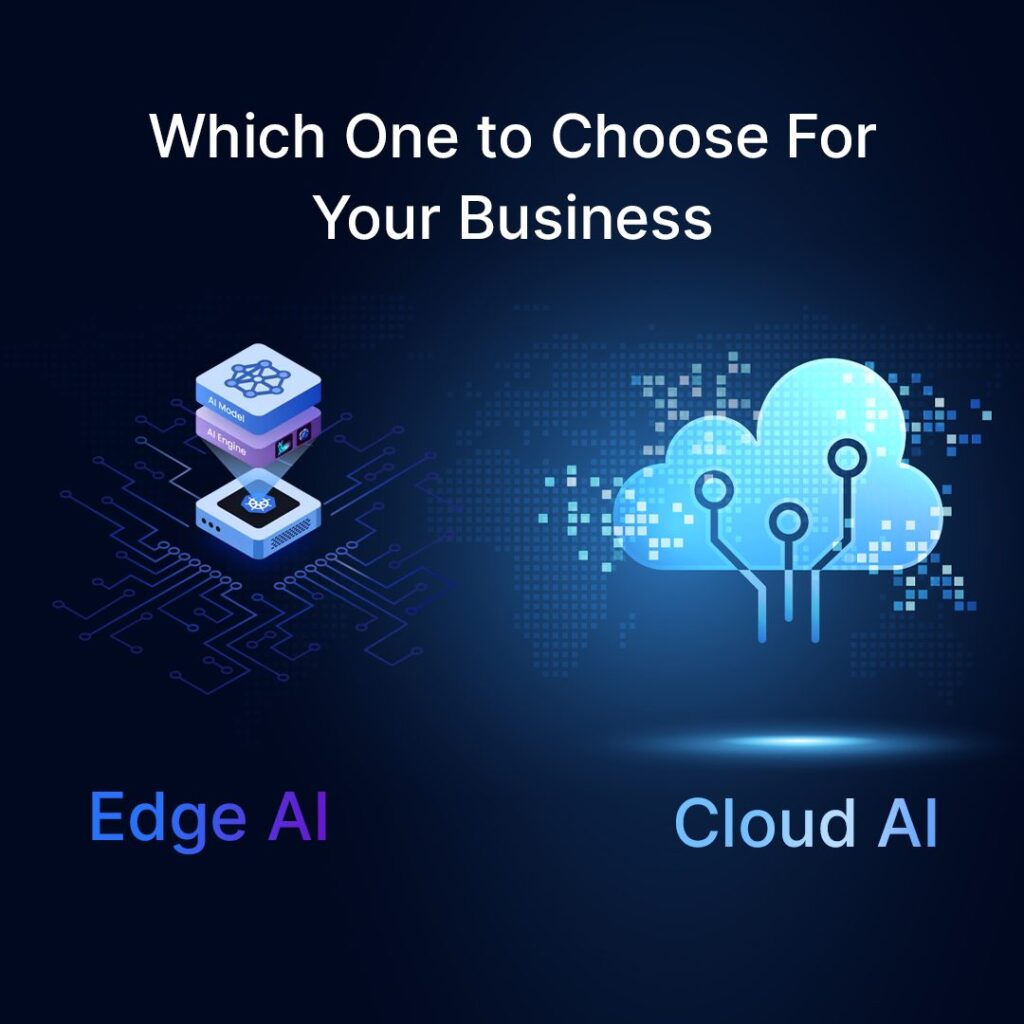
Edge AI excels in low-latency, real-time scenarios, while cloud AI offers greater scalability and computational power. Processing data at the edge reduces bandwidth usage and cloud costs, making it more economical for high-frequency or time-sensitive applications. However, cloud AI remains essential for large-scale training and complex analytics.
Security, Privacy, and Data Compliance
Security and privacy are major reasons organizations adopt edge AI. By keeping sensitive data on local devices, companies reduce exposure to breaches and simplify compliance with data protection regulations. This makes edge AI particularly attractive for healthcare, finance, and surveillance applications.
Hybrid Edge-Cloud AI Deployment Models
Many organizations are adopting hybrid edge-cloud AI models. In this approach, edge AI handles real-time inference while the cloud supports model training, updates, and long-term analytics. This balance allows businesses to benefit from both speed and scalability, making hybrid deployment one of the most practical AI strategies today.
Security, Privacy, and Ethical Issues in Edge AI
As edge AI adoption accelerates across industries, concerns around security, privacy, and ethics are becoming just as important as performance and scalability. Unlike cloud-based AI, edge AI processes data directly on local devices, which introduces new risks but also unique advantages. Understanding these challenges is essential for responsible and sustainable edge AI deployment.
Device-Level Security Risks and Solutions
One of the biggest security challenges in edge AI is device-level vulnerability. Edge devices such as sensors, cameras, and embedded systems are often deployed in uncontrolled or remote environments, making them susceptible to physical tampering, malware, and unauthorized access. Unlike centralized cloud systems, securing thousands of distributed edge devices can be complex.
To address these risks, organizations are implementing hardware-based security modules, secure boot mechanisms, encrypted model storage, and regular firmware updates. AI model integrity checks and secure over-the-air updates also help protect edge AI systems from attacks. As edge AI news continues to highlight security incidents, proactive protection is becoming a top priority.
Data Privacy Benefits of Edge AI
Despite security concerns, edge AI offers significant data privacy advantages. Because data is processed locally, sensitive information such as biometric data, medical records, or video footage does not need to be transmitted to the cloud. This reduces exposure to breaches and minimizes compliance risks.
For industries facing strict data protection regulations, edge AI supports privacy-by-design principles. Local data processing enables organizations to comply more easily with regulations while still benefiting from AI-driven insights. This privacy advantage is one of the key drivers behind the rapid growth of edge AI adoption.
Ethical AI and Responsible Edge Deployment
Ethical considerations are increasingly part of edge AI discussions. Bias in AI models, lack of transparency, and misuse of surveillance technologies are major concerns. Because edge AI operates autonomously and in real time, errors or biased decisions can have immediate consequences.
Responsible edge AI deployment requires clear governance frameworks, regular model audits, and explainable AI techniques. Companies must ensure that edge AI systems are fair, transparent, and aligned with ethical standards, especially in sensitive applications such as public surveillance, healthcare, and law enforcement.
Global Edge AI Market and Regulatory Updates
The global edge AI market is evolving rapidly, driven by technological advancements and increasing regulatory scrutiny. Governments and policymakers are working to balance innovation with safety, security, and ethical responsibility.
Edge AI Market Growth and Forecasts
Edge AI market growth continues to accelerate as industries seek faster, more efficient AI solutions. Rising demand for real-time analytics, smart devices, and automation is fueling investment in edge AI hardware and software. Market forecasts consistently point to strong double-digit growth, with edge AI becoming a core component of digital transformation strategies.
This growth is supported by advances in AI chipsets, low-power processors, and optimized AI models that make edge deployment more cost-effective and scalable.
Government Policies and AI Regulations
As edge AI adoption increases, governments are introducing AI-related policies and regulatory frameworks. These regulations focus on data protection, algorithmic transparency, cybersecurity, and ethical AI usage. While most AI laws are technology-neutral, their implications for edge AI are significant due to decentralized data processing.
Regulatory clarity is essential for businesses investing in edge AI. Clear guidelines help organizations deploy AI responsibly while maintaining innovation and competitiveness in global markets.
Regional Edge AI Developments (US, EU, Asia)
Edge AI development varies by region. The United States leads in innovation, driven by major technology companies and strong startup ecosystems. Europe focuses heavily on ethical AI, privacy, and regulatory compliance, influencing how edge AI solutions are designed and deployed. Asia, particularly China, Japan, and South Korea, is rapidly advancing edge AI in manufacturing, smart cities, and consumer electronics.
These regional differences shape the global edge AI landscape and influence how technologies are adopted worldwide.
What’s Next for Edge AI?
Edge AI is still evolving, and the next few years will bring major changes in technology, adoption, and use cases.
Upcoming Edge AI Technologies to Watch
Future edge AI technologies include neuromorphic computing, event-driven AI chips, and ultra-efficient AI accelerators. These innovations aim to mimic human brain efficiency, enabling complex AI tasks with minimal power consumption. Advances in edge AI software platforms and automated model optimization will further simplify deployment.
Predictions for Edge AI Adoption
Edge AI adoption is expected to expand beyond early adopters into mainstream business operations. Industries such as logistics, agriculture, energy, and telecommunications are increasingly integrating edge AI into daily workflows. As hardware costs decrease and tools mature, even small and medium-sized enterprises will adopt edge AI solutions.
Challenges and Opportunities Ahead
Despite its promise, edge AI faces challenges including device management complexity, interoperability issues, and talent shortages. However, these challenges also create opportunities for innovation, new platforms, and specialized services focused on secure and scalable edge AI deployment.
Frequently Asked Questions About Edge AI News
What is Edge AI and how does it work?
Edge AI refers to artificial intelligence systems that process data locally on devices rather than relying solely on cloud servers. This enables faster decision-making and reduced data transmission.
Why is Edge AI important for real-time applications?
Edge AI minimizes latency, allowing systems to respond instantly. This is critical for applications like autonomous vehicles, industrial automation, and healthcare monitoring.
Which companies are leading Edge AI innovation?
Leading edge AI innovators include major semiconductor manufacturers, cloud providers, and AI-focused startups developing specialized hardware and software solutions.
Is Edge AI more secure than cloud AI?
Edge AI can be more privacy-friendly because data stays local, but it requires strong device-level security to prevent physical and cyber threats.